Why Silver Teapots Changed Shape as Tea Drinking Spread
Why silver teapots changed shape: see how brewing, pouring and table service shaped their forms, and learn what a pot’s details can—and cannot—tell you.
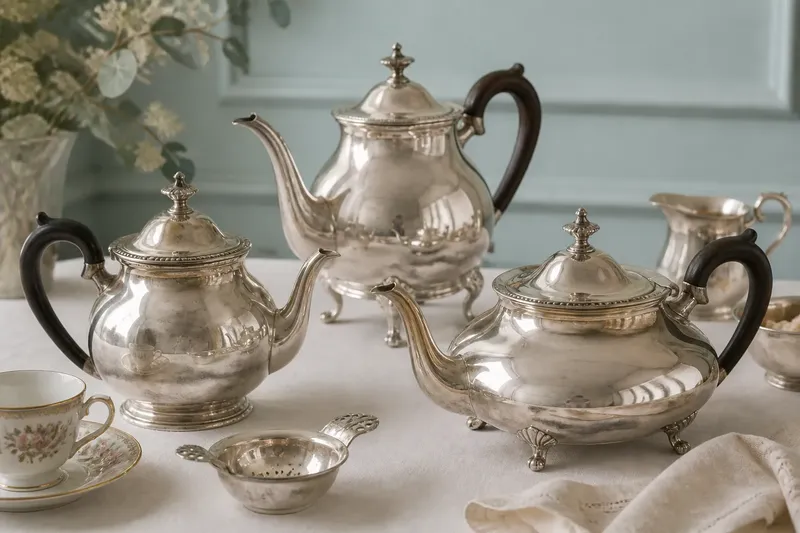
Silver teapots changed shape as makers balanced brewing and pouring with the way a household served tea. The story of why silver teapots changed shape is not a single timeline: period, place, commission and personal taste all influenced the vessel.
Compact bodies suited careful service
In Britain, tea was an imported drink whose cost and availability varied across periods and households. Some early silver teapots were compact, a form that suited modest service and made a small vessel an elegant object on the table. But size alone cannot tell us how much tea a particular owner brewed or how often the pot was used.
Rounded bodies, narrow necks and close-fitting lids helped give these pots a contained silhouette. The handle and spout had a more direct task: they needed to let someone lift the vessel and guide tea into a cup. Some pots were used to brew tea; others may have served tea prepared by another method. Their shapes do not settle that question on their own.
A teapot was like a well-balanced serving tray: its purpose depended on how the parts worked together, not on one striking feature. The body held the brew, while the handle and spout shaped the act of pouring.
Broader forms made a different table presence
A wider body could hold a larger volume, but it does not prove that a pot belonged to a later period or a particular kind of household. Silver objects were commissioned for different occasions and budgets, and shapes could remain in use alongside newer designs.
Broader proportions also changed how a pot sat among cups and other serving pieces. Makers had to consider balance: the handle needed to offer a secure grip, and the spout had to direct the pour without making the vessel awkward to control. These relationships matter more than body size in isolation.
Imagine a household with a compact pot and cups arranged for a small tea service. The host brings out a broader pot for a gathering and serves several people from it. The visible result is a more prominent vessel at the centre of the table, though the change in shape alone cannot tell us when or why the owner acquired it.
Spouts made pouring part of the design
The spout is where the teapot’s serving purpose becomes especially clear. A short spout may produce a direct pour, while a longer projection can reach a cup set farther from the body. Its angle and height matter alongside its length, and the result depends on the pot’s balance and the way it is held.
Silversmiths could shape spouts as straight, curved or tapered forms, linking practical requirements with the vessel’s style. A full pot can be heavy, so the handle and spout need to work together in the hand. Decoration may draw the eye, but it does not reveal how comfortably a particular person could pour.
Some pots include a strainer near the spout; others rely on a separate strainer at the cup. A built-in feature suggests one way of keeping leaves back, but its absence does not show that leaves were never brewed in the pot. Serving customs varied between households and could change over time.
Handles and lids shaped the act of serving
A small loop handle can suit a compact pot, while a larger body may call for more room and leverage. Some handles incorporate materials intended to stay cooler than silver, but their construction and condition differ. Look at how the grip relates to the body rather than assuming that one handle style identifies a particular use.
The lid had to remain in place as the pot tilted and still allow access for filling and cleaning. A finial gave the user a point to grasp; a hinge kept the lid attached, while a loose lid could be lifted away. These features show design choices, not a complete account of how the pot was used.
When a lid shifts or a handle sits awkwardly, serving becomes less comfortable. A maker’s challenge was to make body, lid, handle and spout feel like parts of one object, rather than separate details competing for attention.
Tea services separated serving tasks
Some households used related vessels for different purposes: a teapot for tea, a kettle for hot water, and smaller pieces for cream or other accompaniments. The precise arrangement varied by period, place and household. When a group of matching pieces survives, compare their scale and shape before assigning each one a role.
Teapots can be squat and broad or taller, sometimes raised on feet or a pedestal-like base. A low body has a grounded appearance; a raised form gives the vessel a different stance on the table. Neither shape points to one universal brewing method. The service, the maker’s design and the owner’s preferences all matter.
A pot’s footprint and height also affected where it could sit among cups and other pieces. These proportions shaped the experience of serving, but they are clues to consider alongside marks, construction and decoration—not a shortcut to a date or a precise household custom.
What can a silver teapot’s shape tell you?
Why are some silver teapots squat and others tall?
Proportions reflect design choices and possible serving needs, rather than a rule about brewing. Compare the base, handle and spout as a group, and avoid treating height alone as evidence of age or use.
Does a long spout mean a teapot is older?
No single feature can establish a date. Spout forms can reflect fashion or function, and makers may revisit earlier styles, so compare construction, decoration and hallmarks before drawing a conclusion.
Can the shape show whether tea leaves were brewed inside?
A built-in strainer may suggest that leaves were expected to stay in the pot, but a separate strainer could have been used instead. The shape can offer a clue, not a definitive answer.
Why do some silver teapots have feet?
Feet raise the body and change the pot’s stance and appearance. They may lend a formal look, but they do not identify a precise brewing method or date by themselves.
Read form alongside the rest of the object
Start by looking at how the body, handle, lid and spout relate. Notice where the spout directs the stream, whether the grip seems clear of the body, and how the base meets the table. Then compare the pot with any surviving cups, kettle or related pieces.
For example, imagine you are examining a silver teapot with a broad body, a long spout and a separate lid. You note that the lid has no hinge, the spout has no visible strainer and the handle sits clear of the body. You then compare its construction, decoration and hallmarks with other known objects, rather than dating it from its silhouette alone. The result is a more careful description of its design; its original brewing method and serving setting remain open unless other evidence supports them.
The form of a silver teapot records choices about holding, pouring and presenting tea, but it rarely tells the whole story by itself. To understand why silver teapots changed shape, read each feature in relation to the rest of the vessel and treat conclusions about period or household custom as provisional until the object’s other evidence agrees.