The Polishing Habit That Can Wear Away Detail
Learn how silver polishing can wear away fine detail, when to leave tarnish alone, and how gentle handling helps preserve an object's surface.
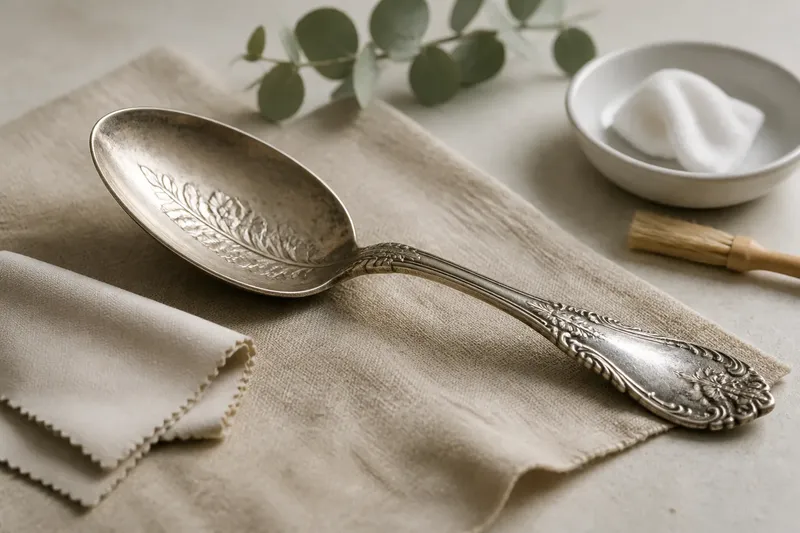
Silver polishing can soften engraved initials, flatten crisp edges and blur fine chasing when it becomes routine. A polishing cloth may feel harmless, but rubbing can remove a little surface material along with tarnish. On decorated silver, the better habit is to clean only what needs attention and leave stable detail alone.
Polishing can soften fine workmanship
Tarnish is a discoloured surface layer that forms as silver reacts with substances in the air and with materials it touches. Polishing compounds remove that layer through mild abrasion or chemical action, depending on the product. Abrasive products can also remove a small amount of silver. Repeated polishing may gradually change the surface.
The effect is easiest to see on raised or finely worked areas. A chased border, sharp corner, engraved line or recess around a handle can lose clarity if it is rubbed again and again. A cloth reaches exposed high points first, while recesses may stay dark. The contrast that helps decoration stand out can fade.
Think of a carved wooden spoon: sanding its whole surface whenever it looks dusty would slowly soften the carved lines. Silver is harder, but the principle is similar. Edges, marks and texture are part of the object, not simply a finish to make bright.
Not every dark area needs polishing
Light tarnish is not automatically damage. It may appear as an even tone across a plain surface, or settle in recesses and make decoration easier to read. Ask whether the discolouration interferes with use, obscures an important detail or simply records the surface’s age and handling.
A dull film across an entire piece is different from dark material lodged in a narrow engraving. Scrubbing the whole object to reach one small mark treats every surface as though it needs the same intervention. If a piece is valuable, unusually fragile or has a finish you do not recognise, ask a conservator or reputable silver specialist before polishing. Plated objects, deliberately darkened finishes and mixed materials need particular care.
Say you have a silver serving spoon with a crisp floral pattern and a faint grey cast. If the pattern remains clear and the spoon is not needed for use, you might leave it alone and store it clean and dry. If one patch bothers you, try a soft cloth and a product intended for that object on a small, inconspicuous area; stop if the finish changes unexpectedly. The aim is a modest improvement, not uniform brightness at any cost.
Choose the gentlest suitable cleaning method
Before reaching for polish, remove loose dust with a clean, soft cloth. If the object can safely be washed, mild washing-up liquid and lukewarm water can remove grime with less rubbing than polishing. Rinse carefully and dry at once with a soft, lint-free cloth, including crevices where water could remain. Washing is unsuitable for some pieces, including those with glued components, porous handles, fragile seams or mixed materials.
If tarnish still needs attention, choose a silver polish suited to the object and follow its directions. Apply it with light pressure, only where needed. Avoid vigorous circular buffing over engraved or textured areas: it can catch on details and spread abrasion across the surrounding surface. Do not use a rough sponge, scouring pad or improvised abrasive cleaner.
Silver dips can brighten quickly, but they may affect deliberately darkened recesses and can be hard to control on complex decoration or attached materials. Abrasive creams and polishing cloths also differ in strength. If the product label or maker’s guidance does not clearly suit the object, pause and seek advice rather than experimenting.
Use handling and storage to slow tarnish
Care between cleanings can reduce how often polishing seems necessary. Handle silver with clean, dry hands, since oils and residues can leave marks. After use, wash an ordinary, uncoated piece if its construction allows, dry it thoroughly and put it away rather than leaving it damp or in contact with food. Avoid materials that can encourage tarnish, such as rubber, wool, felt and certain papers.
A clean, dry cupboard or drawer is often more useful than an elaborate display arrangement. Store pieces in a soft, silver-safe cloth or purpose-made anti-tarnish material, keeping them apart so they do not rub together. Do not wrap an object so tightly that pressure bears on a delicate handle or projecting ornament. The aim is to limit contact with tarnish-promoting materials while protecting the surface from knocks.
Display pieces may darken faster than objects kept away from air and frequent handling, but that does not mean they need constant polishing. A brief visual check can help you notice changes; a soft dusting removes loose particles without trying to make the silver shine. If fingerprints or a small patch of tarnish appear, treat that area rather than polishing every surface.
When should silver polishing be avoided?
How often should silver be polished?
There is no single schedule for every object. Polish when tarnish is objectionable or affects use, rather than because a set interval has passed; the finish, storage and handling all matter.
Can a polishing cloth damage engraved silver?
Repeated rubbing can gradually soften raised edges and reduce the crispness of engraving, especially if the cloth contains polishing compounds. Use light pressure and do not treat a detailed surface like a plain sheet of metal.
Should I remove tarnish from the grooves?
Not necessarily. Darkening in recesses can make relief and engraving easier to see, and removing it may require more rubbing than exposed surfaces need. Clean those areas only for a clear reason and when you understand the object’s finish.
What should I do with silver that has an unfamiliar finish?
Do not assume that brightening it is the right treatment. Pause before using polish or a dip, and ask a qualified conservator or silver specialist if the piece has unusual decoration, attached materials or significant value.
Let the object guide your care
The best-looking silver is not always the brightest. A piece can carry a soft patina and still be well cared for; sharp decoration and an intact surface may matter more than a mirror-like shine. Before polishing, look closely in good light and decide what change you actually want.
For silver polishing, deliberate attention matters more than frequent buffing: remove dirt gently, address tarnish only where needed, and stop once the detail remains clear. That pause before reaching for the cloth can help preserve the workmanship.